Getting bitten indoors every evening?
Tell us where you are seeing them on WhatsApp and we will help you find the breeding source before we ever quote a treatment.
WhatsApp now Where mosquitoes breed in Dubai
Mosquitoes lay their eggs in standing water, and the larvae grow there before they ever take to the air. So the question is never really "how do I kill the mosquitoes", it is "where is the water they are coming from". In a Dubai apartment, the answers are surprisingly consistent.
The biggest overlooked source is the AC condensate drip tray and drain line. A split AC pulls litres of moisture out of the air, and that water collects in a tray and drains through a small line. When the line is slow or blocked, the tray holds warm, still water for weeks, which is close to a perfect nursery. Most residents do not know the tray exists, let alone that it needs clearing.
After the AC, the usual sources are:
- Plant pot saucers holding water under indoor and balcony plants.
- Irrigation pooling from over-watered balcony pots and planters.
- Blocked balcony and floor drains that trap a shallow pool.
- Water features and ornamental bowls that sit still.
The scale is the part people miss. In Dubai's heat the mosquito life cycle races along, and even a bottle cap of standing water can breed hundreds of larvae in a week. A saucer you never empty is a factory.
The two species biting you
Two mosquito types account for most bites here, and they behave differently.
Culex, the common house mosquito, is the classic night biter. It is the one whining around your ear after dark and the reason a bedroom needs a screen or a repellent overnight.
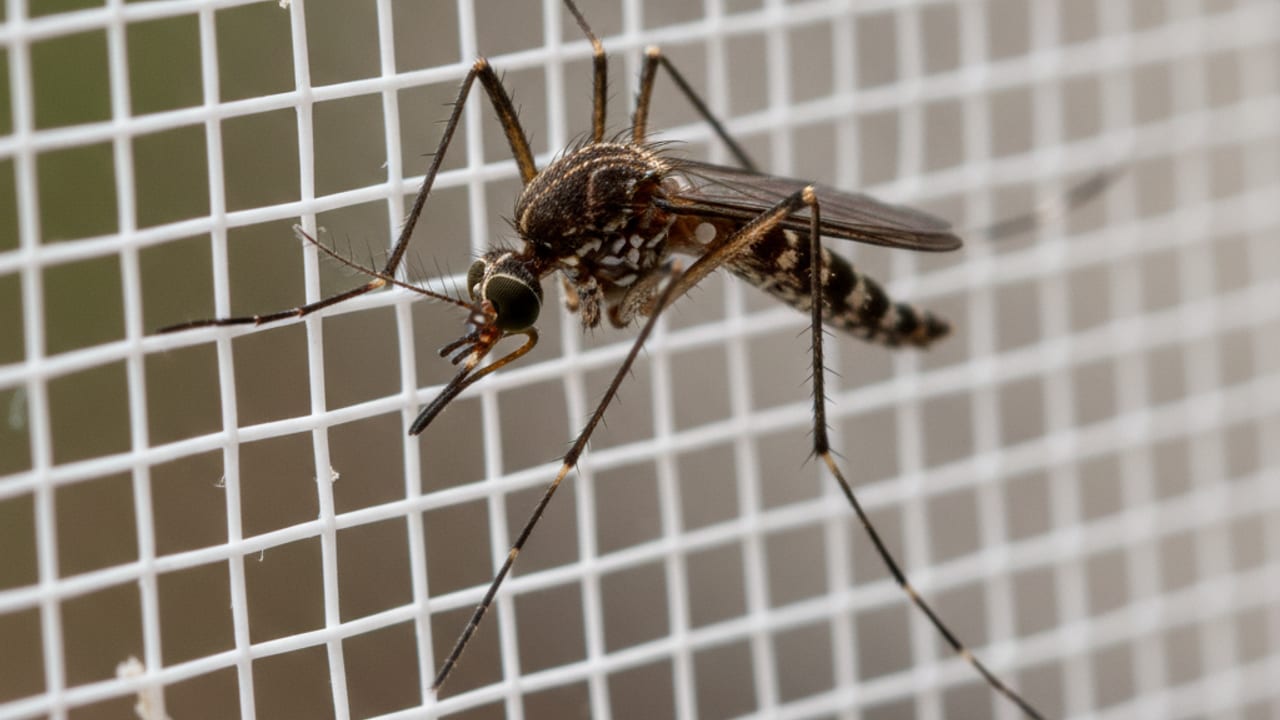
Aedes is the aggressive daytime biter, easy to spot by the striped legs. It bites in daylight, often around the ankles, and regionally it is the species of concern as the dengue vector. Daytime bites in the living room point to Aedes rather than Culex.
The practical difference matters because Aedes is a container breeder that likes small, clean pools of water close to where people are, exactly the saucers, drip trays, and balcony catchments already listed. So if your bites are happening in daylight, the breeding source is almost certainly on your own balcony or inside the flat, not drifting in from a distant marsh. That is good news, because it means you can find and remove it yourself.
Bites during the day, not just at night?
That points to Aedes, and it usually means a breeding source on your own balcony. We will help you find it.
WhatsApp now The core principle: source reduction
Here is the rule that decides whether you win this: source reduction beats spraying adults. Fogging a room kills the mosquitoes flying in it right now, and by the next evening a fresh batch has emerged from the water you never dealt with. Remove or treat the standing water first, using a larvicide where you cannot drain it, and only then deal with the remaining adults. Do it in that order and the numbers actually drop and stay down.
Spray the adults and you are mopping the floor with the tap running. Clear the water and you have turned the tap off.
Apartment plan
For a flat, work through the sources in order:
- Find and clear the AC condensate source. Have the drip tray and drain line cleared so no water pools. This is the same drainage that breeds drain flies, and our drain fly control guide covers exactly how to locate and treat AC condensate drains.
- Empty pot saucers and tip out any standing water on the balcony after watering.
- Fit or repair window and door screens so the adults from outside cannot get in.
- Use plug-in or mains repellents indoors, especially in bedrooms overnight, for comfort while you clear the sources.
Villa and garden plan
A villa with a garden has more standing water and more approaches, so the plan scales up:
- Larvicide the standing water you cannot drain, such as water features, drains, and low spots that hold irrigation runoff.
- Outdoor residual spray on the surfaces where adults rest, around walls, planting, and shaded corners.
- Misting to knock down adults across the garden during peak pressure. Our misting guide explains how and when it is worth doing.
For what a mosquito programme costs across apartment and villa, see our pest control cost guide.
Mosquito season in Dubai
Mosquito pressure is seasonal. It builds through the warm months and peaks from April to October, with a particularly bad spell in September and October when humidity stays high and breeding is fastest. Clearing your standing water before the season ramps up is the cheapest way to get through the peak with fewer bites, because you are cutting the supply at the point where it would otherwise explode.
The heat is the reason a small problem turns big so quickly. Warm water speeds the whole life cycle, so eggs laid this week are biting adults within days rather than weeks. That is why a saucer or a slow AC drain that would be a minor nuisance in a cooler climate becomes a real infestation here, and why staying on top of standing water through summer matters far more than it does elsewhere.
If the numbers around your building are already high before you start, an outdoor treatment on the shared and garden areas gives you a head start while your own source clearing takes hold. From there, a light routine, emptying saucers and keeping the AC line clear, holds the line through the worst months.
Sort the source, not just the symptom
We find where they are breeding, treat the water, and deal with the adults, in that order. Message us to book.
WhatsApp now FAQ
Why are there so many mosquitoes in my apartment?
In most Dubai flats the answer is a hidden breeding source of your own, not mosquitoes flying in from outside. The usual culprit is the AC condensate drip tray and drain line, which holds warm, still water for weeks. Add pot saucers, a blocked balcony drain, or a water feature, and a single flat can produce its own steady supply. In the heat, even a bottle cap of standing water can breed hundreds of larvae in a week.
Where do mosquitoes breed in a Dubai flat?
Anywhere water sits still. The most overlooked source is the AC condensate drip tray and its drain line. After that: plant pot saucers, pooling from over-watered balcony plants, blocked balcony and floor drains, and decorative water features. Mosquitoes do not need much; a few millimetres of standing water is enough, so the fix is to find and empty or treat every one of these.
How do I stop mosquitoes coming from the AC?
Clear the condensate source. The drip tray and drain line under a split AC hold still water and are a classic breeding spot that most residents never check. Have the tray and line cleared and kept draining freely so water does not pool. This overlaps directly with drain fly control, since the same AC condensate drains breed both; our drain fly guide covers how to find and treat them.
Do plug-in repellents actually work?
For a room you are sitting in, yes, mains and plug-in repellents genuinely reduce bites and are useful overnight in a bedroom. What they do not do is fix the problem, because they only affect adults in that room while the larvae keep maturing in your breeding source. Treat them as comfort, not a cure. Clearing the standing water is what actually brings the numbers down.
When is mosquito season in Dubai?
Pressure builds through the warm months and peaks from April to October, with a notably bad spell in September and October as humidity stays high. This is when breeding is fastest and bites are worst, so it is the window where source reduction and outdoor treatment pay off most. Clearing standing water before the season ramps up keeps numbers manageable through the peak.
Can pest control get rid of mosquitoes for good?
We can bring numbers right down and keep them down, but no honest company promises permanent zero, because adults will always drift in from surrounding areas. Lasting control comes from removing your own breeding sources and treating standing water with larvicide, backed by outdoor residual spraying or misting on villas and gardens. Source reduction is the part that holds; spraying adults alone is temporary.